


Hiring more ServiceNow developers isn't solving your backlog problem. Here's what actually works.
If you're managing a ServiceNow instance, you know this feeling: no matter how many ServiceNow developers you hire, the backlog keeps growing. You've tried full-time employees, contractors, offshore teams, expensive ServiceNow certifications. And still, you're not getting the velocity you need.
Here's what most organizations miss: this isn't a ServiceNow hiring problem. It's a delivery capacity model problem.
The math is brutal. ServiceNow releases three major updates annually with 50-100+ new features each. Your business requirements evolve every 4-6 weeks. Meanwhile, it takes 45-90 days to hire a specialized ServiceNow developer, and another 6-8 weeks before they're productive. By the time your new hire contributes, requirements have changed twice and your ServiceNow backlog has grown 30%.
Why Hiring ServiceNow Developers Can't Scale Delivery Anymore
The conventional playbook (hire more ServiceNow developers) fails because of three structural challenges facing ServiceNow teams.
Specialization. You don't need "a ServiceNow developer." This month you need an ITSM specialist for incident workflows. Next month, an IRM expert for compliance modules. By Q3, an integration specialist for your ERP connector. Q4 brings SecOps requirements. No single hire solves this. You either carry expensive specialists through idle periods, accept slower delivery from generalists, or stay trapped in constant recruiting.
Ramp time. Even perfect ServiceNow candidates need weeks 1-2 for security provisioning, weeks 3-4 for platform familiarization, and weeks 5-6 for first productive commits. That urgent project from month one? It's now month three, and requirements have evolved twice.
Retention. ServiceNow talent faces 40% turnover in specialized roles. Every departure costs 3-6 months of institutional knowledge. You're not building ServiceNow development capacity. You're in permanent replacement mode.
Traditional hiring isn't scaling ServiceNow delivery anymore. It's barely keeping the lights on.
AI Developers for ServiceNow: The Capacity Model That Scales
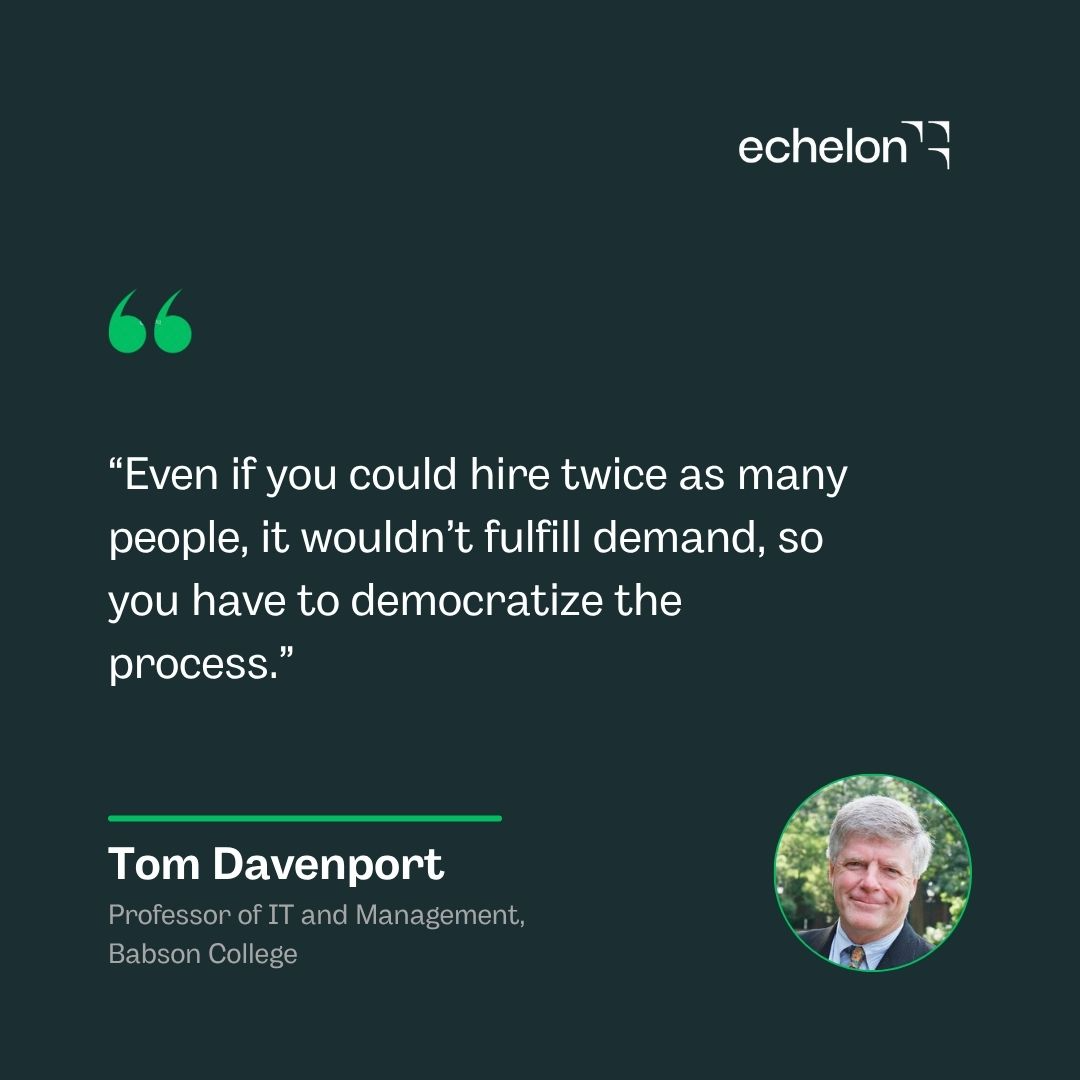
What if ServiceNow development capacity scaled like cloud infrastructure - elastically, matching demand in real-time?
AI developers for ServiceNow make this possible. Early adopters report 40-60% faster ServiceNow delivery on development tasks. But this isn't about replacing ServiceNow developers. It's about fundamentally changing what they spend time on.
Consider a typical ServiceNow workflow implementation.
Traditional approach: developer reads requirements, identifies gaps, asks questions, waits for responses, starts coding, hits a blocker, waits again. Medium-complexity ServiceNow task: 3-5 days.
AI developer approach: AI parses requirements and immediately flags: "Approval group 'Finance-Approvers' not found. Should I (1) create new group (2) map to existing or (3) modify requirement?" Developer clarifies instantly, AI generates the ServiceNow implementation, developer reviews and approves. Same task: 45 minutes.
The difference isn't just speed. It's eliminating wait states entirely. Questions get answered immediately. ServiceNow work keeps flowing.
A healthcare provider tracked this over three months: AI-augmented ServiceNow workflows had 2% defect rate versus 10% for human-developed workflows. Quality actually improved because instant feedback catches issues before they compound.
Want to cut your ServiceNow backlog in half?Book a demo with Echelonto discover how AI developers deliver workflows, integrations, and apps 3-5x faster than traditional hiring.
What AI Developers Can Build in ServiceNow
Here's the reality: AI developers can handle far more ServiceNow development than most people expect.
From routine to complex ServiceNow work: They excel at business rules, workflows, integrations, catalog items, UI policies, and ACLs. But they also handle greenfield ServiceNow application builds, complex integrations with legacy systems, custom platform extensions, and ServiceNow performance optimization. Things traditionally requiring senior ServiceNow expertise.
Where human ServiceNow developers add value: Not in execution, but in judgment. Requirements validation (ensuring you're solving the right problem). Architecture decisions considering long-term implications. Code review for security and performance. Strategic direction (what to build next and why). Stakeholder communication and change management.
The key distinction: AI developers execute ServiceNow work with high precision across complexity levels. Human developers provide context, judgment, and strategic oversight.
Current limitations are narrow: Novel use cases without any reference examples, and staying current with brand-new ServiceNow features (2-4 week lag after release). That's largely it. Most organizations find 70-80% of their ServiceNow backlog immediately addressable with AI developers.
How to Implement AI Developers for ServiceNow Development
The difference between success and failure in ServiceNow AI implementation comes down to approach. Start with a four-week pilot.
Week 1: Select 20-30 ServiceNow backlog items spanning complexity levels. Choose 2-3 curious developers. Baseline your velocity and defect rates.
Week 2: AI handles 50% of ServiceNow tasks with rigorous human review. Track time savings and quality metrics.
Week 3: Expand to 70% AI augmentation. Add more complex ServiceNow work. Watch where developers spend their time now.
Week 4: Analyze results. If you're hitting 30%+ time savings with quality at baseline, scale it. If not, stop and adjust.
One financial services firm ran this pilot on ServiceNow workflow and integration work. Week 2 showed 45% time savings. Week 3 added custom applications—still 40% faster. Week 4 decision: expand to full team. Six months later, their ServiceNow backlog decreased 60% with the same headcount.
The scaling key: Invest in role transition. ServiceNow developers move from implementer to architect. Train them on effective AI oversight, not just tool usage. Create career paths around orchestrating AI developers for ServiceNow, because this is a valuable new skill set.
Next Steps for Your ServiceNow Development Team
If your ServiceNow backlog is growing faster than your team can deliver:
Start with an honest audit. Spend one hour categorizing your ServiceNow backlog: rules-based, pattern-based, complex. Likely 70-80% could be AI-augmented. Calculate the time savings if those tasks ran 3-5x faster. That's your opportunity.
Run a small, low-risk pilot. Pick high-volume ServiceNow work like catalog items or standard workflows. Four weeks, clear metrics, commitment to stop if it doesn't work. Most ServiceNow teams see results in week two.
Rethink your ServiceNow hiring plan. Would you rather spend three months recruiting one senior ServiceNow developer, or four weeks validating a model that could give you 5x that capacity?
The ServiceNow teams winning right now aren't hiring fastest. They're fundamentally changing how they scale delivery.
Ready to test AI developers in your ServiceNow instance?Book a demo with Echelonto learn how leading ServiceNow platform teams are reducing backlogs 60% with the same headcount.
The Future of ServiceNow Development
Your ServiceNow backlog isn't shrinking. The platform isn't simplifying. Business demands aren't decreasing.
The old model (scale by adding ServiceNow headcount) assumes demand is predictable, skills remain static, and ramp time is acceptable. None of those assumptions hold anymore.
AI-augmented ServiceNow delivery starts with different assumptions: demand is dynamic, capacity must scale in real-time, and execution speed matters more than hiring speed.
The question isn't whether AI developers for ServiceNow become standard practice. The question is whether you'll validate it works for your ServiceNow instance before your backlog forces harder decisions, or after.
The ServiceNow backlog isn't getting smaller on its own.